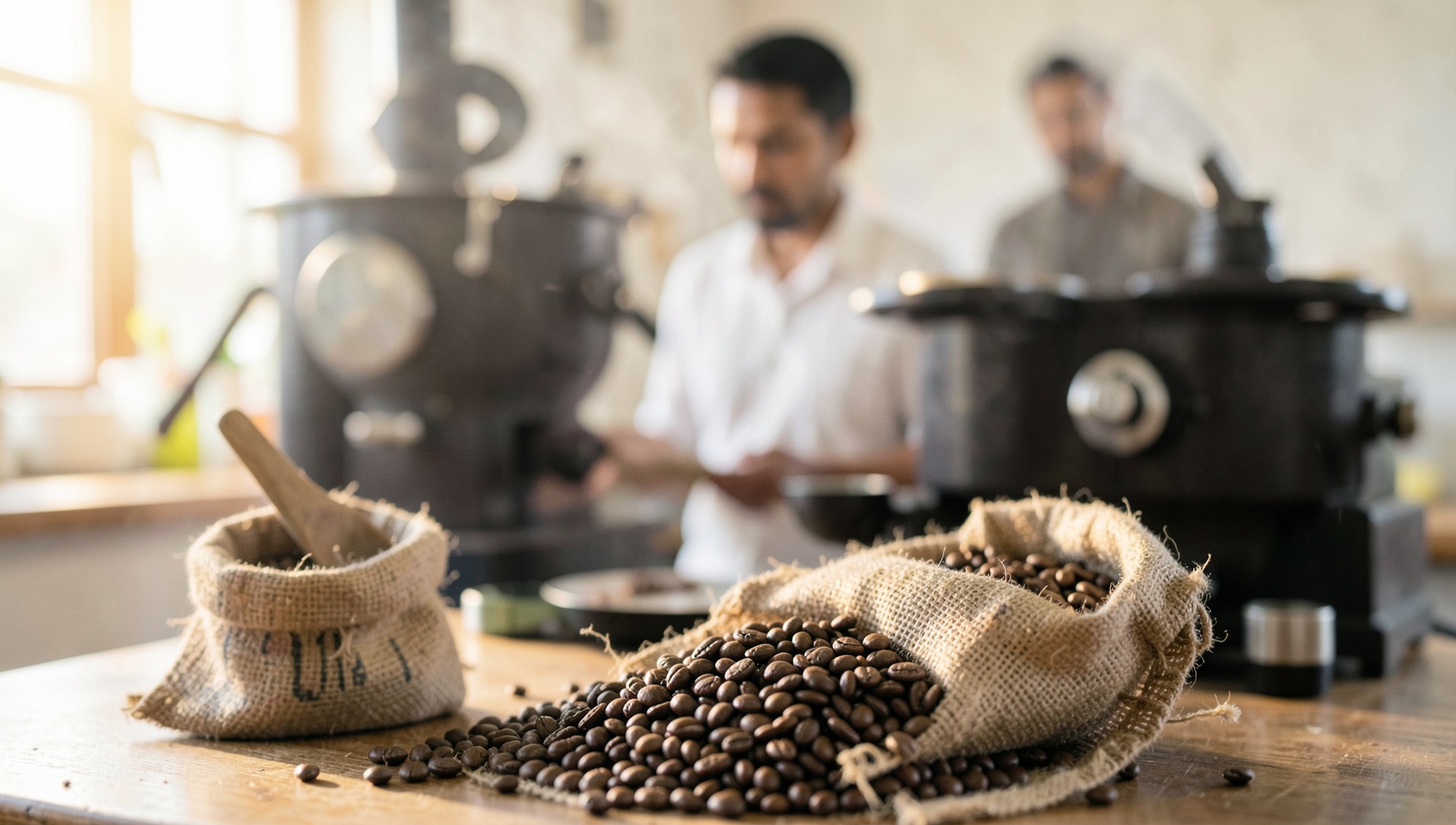
A coffee roaster builds 340 monthly subscribers and a Rs. 12.4 lakh online store.
Ecommerce website development · India
Webzenia builds online stores on Shopify, WooCommerce or headless Next.js, with UPI, COD and Razorpay set as the primary checkout paths.
Get a free ecommerce store auditPortfolio · selected work
Every site below is live and owned by the client. Each window is a capture of the real page, not a drawn mockup.
What an ecommerce website actually is
Anyone can put products behind a checkout. A store that turns visitors into orders, loads fast on a budget phone, and runs on the platform that fits your business is built deliberately.
Every page from product to checkout is built to move a visitor to an order, not just to display a catalogue and hope.
Shopify, WooCommerce or headless, chosen for your catalogue, margins and roadmap, not the one the agency likes to sell.
Tuned to load fast on a mid-range phone and built clean enough to rank, so the store is found and the sale is not lost to a slow page.
Why most online stores quietly leak revenue
A bought theme with a payment plugin looks like a shop on launch day. The cost shows up later: abandoned checkouts, slow on mobile, a platform outgrown by next sale season.
| Theme + pluginsAssembled, left as-is | Engineered storeBuilt to convert and scale | |
|---|---|---|
| The platform | Whatever the freelancer already knew how to install. | Chosen for your catalogue, margins and roadmap. |
| The checkout | A default flow that drops carts at the last step. | Built for how India pays, UPI, cards and cash on delivery. |
| Speed on mobile | Whatever the theme and its stack of plugins weigh. | Tuned to load fast on a mid-range Android over 4G. |
| Found on Google | Bloated output that buries you below faster stores. | Clean, fast, structured pages built to rank from day one. |
| When you grow | Re-platformed the moment the catalogue gets serious. | Extends to more products, channels and traffic cleanly. |
If your store is slow on a phone and your checkout loses carts at the last step, it isn't built, it's assembled. We engineer the store so it earns its keep instead of quietly leaking the revenue that paid for it.
The India context
A store built for desktop broadband and card-only checkout behaves very differently from how most Indian customers actually buy, on a budget phone, paying by UPI or cash.
We build and test the store on real budget devices and throttled networks, not a designer’s MacBook. A product page that feels instant in the studio has to feel instant in a tier-2 city, because that is where the order is won or lost.
We wire the checkout for UPI, cards and cash on delivery, with the trust signals and the flow Indian buyers expect, so the order completes instead of stalling at the payment step.
We build clean, fast, structured product and category pages so the store is found on Google from launch, instead of depending entirely on ads to bring every single visitor.
We pick a platform your team can actually run and hand over clean access and documentation, so adding a product or running a sale never needs us. If you leave, the store still runs.
What the build includes
Not a theme install. The full store, designed, coded and engineered to sell.
Catalogue, category and product pages designed to move a visitor toward an order
a storefront built to sell
A cart and checkout built for how India pays, UPI, cards and cash on delivery, with the trust signals that complete the order
fewer dropped carts
Payment gateway, shipping, GST invoicing and your CRM, wired and tested so orders flow without manual work
a store that runs itself
Tuned to load fast on a mid-range phone and a Good Core Web Vitals score, the speed that holds the ranking and the sale
a fast store
Clean, structured category and product pages built to rank, so the store is found on Google, not only through ads
a rankable store
Conversion tracking, analytics and clean access handed over, deployed to fast, secure hosting
a store you can measure and own
Our stack
The commerce stack behind storefronts that convert and scale. Pick a tool to see why it earns its place, and how we get more out of it than most teams do.
Shopify runs a large share of the world’s serious storefronts: a hosted, PCI-compliant checkout, a deep app ecosystem, and uptime that survives a sale-day traffic spike.
We build on Shopify with a custom theme, not a bought one, wiring UPI and Razorpay into the checkout and structuring the catalogue for Google Shopping and search from day one.
How the build runs
An ecommerce build on a clear timeline, not an open-ended project that drifts.
We agree the platform that fits, map the catalogue and journeys, and design the storefront and checkout. You sign off the platform, the look and the scope before a line of code is written.
We build the storefront and checkout, wire payments, shipping and your CRM, and tune the store to a Good Core Web Vitals score. Everything is QA-ed on real devices and a test order before launch.
We deploy to fast hosting, hand over clean access, then improve the store on a retainer. Conversion, speed and rankings keep climbing instead of the store going stale after launch.
Reported against orders, conversion rate and speed, not just the day the store went live.

Our commitment
Most builds overrun when scope is discovered mid-project. Webzenia front-loads it, so the number you're quoted is the number you pay.
Scope locked before code
A requirements workshop and a design-approved prototype come before development. Changing a flow in Figma costs an hour; changing it after sprint 3 costs a sprint.
A fixed first-phase price
You know the number before you commit, not after.
One team, no handoff gap
The designer who drew the flow and the developer who codes it sit in the same sprint. No agency-to-dev email chain where fidelity breaks.
Built to ship, then supported
Post-launch support is part of the engagement, because that's when real usage data arrives.
A rough estimate from the first call, a fixed price after the workshop.
Questions
Keep exploring
Reusable design systems built before a line of code.
Next.js 15 builds with Core Web Vitals targets in the spec.
Interfaces shaped by real user sessions before build.
Custom Shopify themes built to spec, not from templates.
Performance-first WooCommerce for catalogues under 5,000 SKUs.
Custom WordPress themes with ACF and no page builders.
Sanity and Next.js builds with ISR for catalogue scale.
Diagnose the real cause, then fix it, not a blanket patch.
Lift revenue per session with statistically valid A/B tests.
Accepting new builds · 2026
Tell us what you sell and how you sell it now. We will map the Shopify, WooCommerce, or headless build, with UPI, COD, and Razorpay wired in from the start.
What happens next
Tell us about your store.